PHP2Shell: what the critical PHP vulnerability taught us
On 21 October PHP released an emergency patch for two critical vulnerabilities. What happened, how we handled it and what we take away from it about hosting, communication and versions.
 Roland HaselagerAuthor
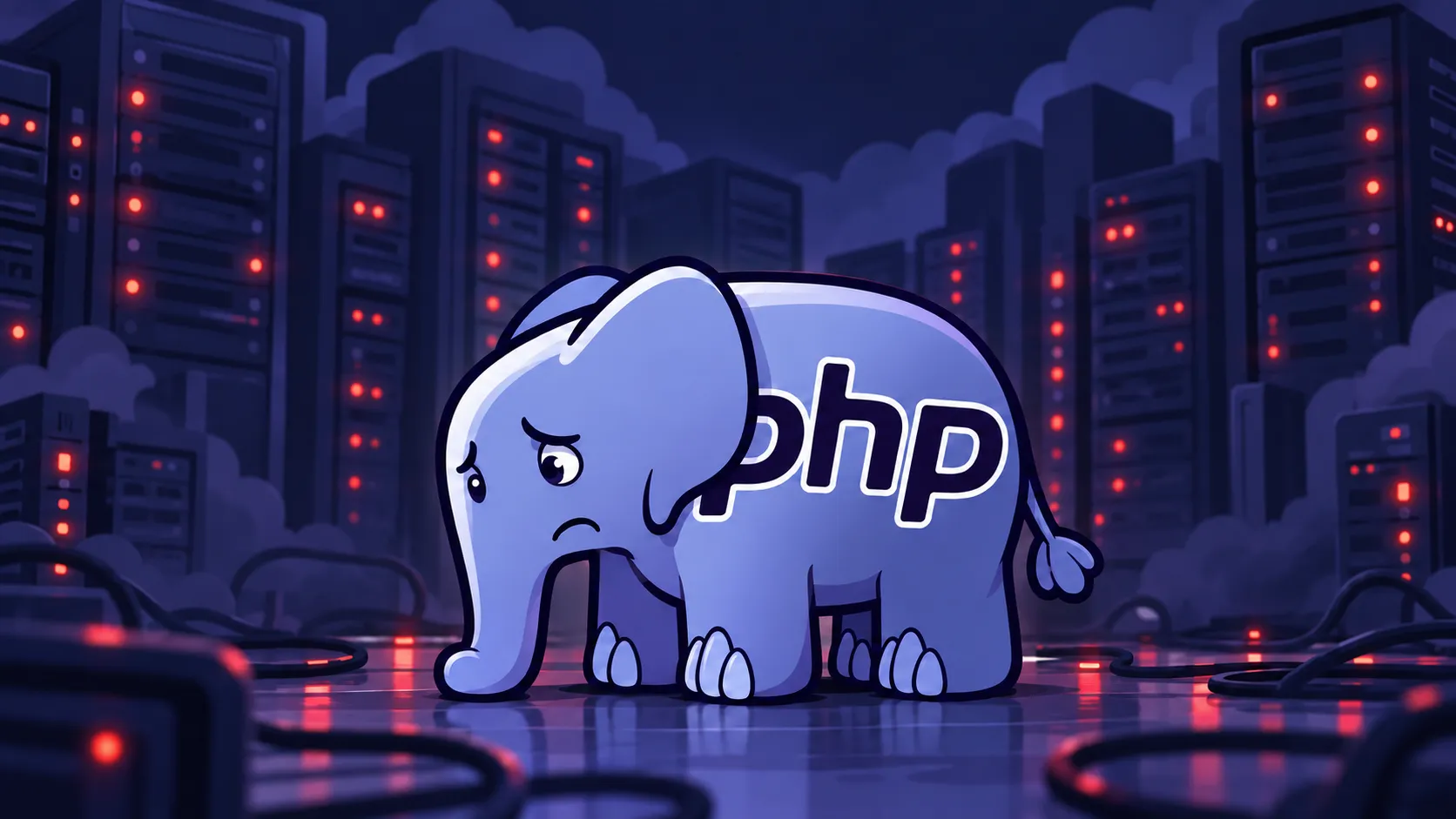
On Wednesday 21 October the PHP security team released emergency updates for two critical vulnerabilities in the PHP engine itself: CVE-2026-109618 and CVE-2026-109619, now known as PHP2Shell. Both score 9.2 on the CVSS scale and make it possible to run code on a web server without logging in. Practically every PHP version of the past ten years was vulnerable, and an exploit was already out in the wild before the patch arrived.
The vulnerability was in the layer that handles requests, before Magento or WordPress itself even runs. So a maintenance mode in the shop didn’t stop attacks. This had to be fixed at server level.
For everyone running a webshop on PHP, and that’s the vast majority of the Magento and WooCommerce world, this was not an ordinary Wednesday.
For our clients it turned out well. That was mainly down to a few choices we made earlier, which make the difference on a day like that.
Hosting is a profession. We deliberately outsourced it.
Managed hosting is an expertise of its own. We deliberately placed it with Hypernode, the market leader in Magento hosting in the Netherlands. That means that on a day like this there’s a team ready that does nothing but keep servers secure.
Hypernode took the lead on 21 October. They put extra mitigations in place across the whole platform and rolled out the patched PHP versions version by version. At 14:30 Hypernode temporarily took the entire platform offline, so there was no attack window until the patch. A deliberate choice: better a few hours offline than a hacked shop. Around 17:00 our shops were back online.
We didn’t have to patch servers or plan night work. Our role was to follow, check and act where needed. After patching, our standard malware scan checked every shop for traces of abuse.
An agency that manages its own servers would have had a very different agenda that day.
Communicating proactively with clients
Where we did spend our time that day: communication. Clients read the news too, and a message like “critical vulnerability in PHP” raises questions. We approached our clients ourselves before they called us. What is going on, what it means for their shop, what Hypernode is doing and when they can expect what.
That sounds obvious, but it’s exactly what prevents unrest on a day like that. A client who knows what is happening doesn’t have to guess.
A client who knows what is happening doesn’t have to guess.
Recent versions of PHP and Magento
The third choice is the least visible, but turned out to be the most decisive that day. We deliberately keep our clients on recent versions of PHP and Magento. That costs time and budget every year, and it’s always tempting to postpone an upgrade by a quarter.
On 21 October that choice paid off. According to the PHP developers, temporary mitigations didn’t cover both vulnerabilities. Only a PHP update really solved it. The fixes were rolled out first for the newest PHP versions, so shops on a recent version were patched first and safely back online. Shops on PHP 8.1 or older had a bigger problem: those versions are end-of-life and didn’t get an official release from the PHP project, only a separate patch to the source code. Anyone running on them depends on what their hosting provider does with it.
The chart below shows how long a number of webshops were offline that day, based on order and visitor data. One of our shops is highlighted. Where most comparable shops were offline for three to five hours, and one even for eight, our shop was fully back up after just under three hours.
We’re going to see this more often
PHP2Shell isn’t an incident you tick off. The vulnerabilities were found with the help of AI, and that cuts both ways. The same tools that help researchers find vulnerabilities also help people with bad intentions. More vulnerabilities, found faster, exploited faster. The time between disclosure and exploitation is getting shorter. On 21 October Cloudflare saw the first attacks as early as 07:43 UTC, hours before the official patch appeared at 13:00 UTC. That even came an hour earlier than planned, because the details had leaked.
At the same time, almost anything can be built yourself these days. An integration, a tool, an extra script next to the shop: with AI it’s there in an afternoon. That’s valuable, but every separate component is also something someone has to maintain, update and patch when it comes to it.
That’s why we expect control over infrastructure and technology to only become more important. Knowing what is running, where it runs, who manages it and on which version. We now see that development gathering pace.
What this means for your shop
Four questions you can ask yourself after this week:
- Who patches your server, and how quickly? Do you know that for sure, or do you assume it?
- Which PHP version does your shop run on? Anything below 8.2 no longer gets official security updates, and 8.2 itself stops at the end of this year.
- Is anything else running on PHP next to your shop? Think of a WordPress site, an intranet or an internal tool. Who patches that?
- Who calls you when something is going on? Or do you have to get it from the news yourself?